


Making stablecoins spendable: Why digital funds need cards
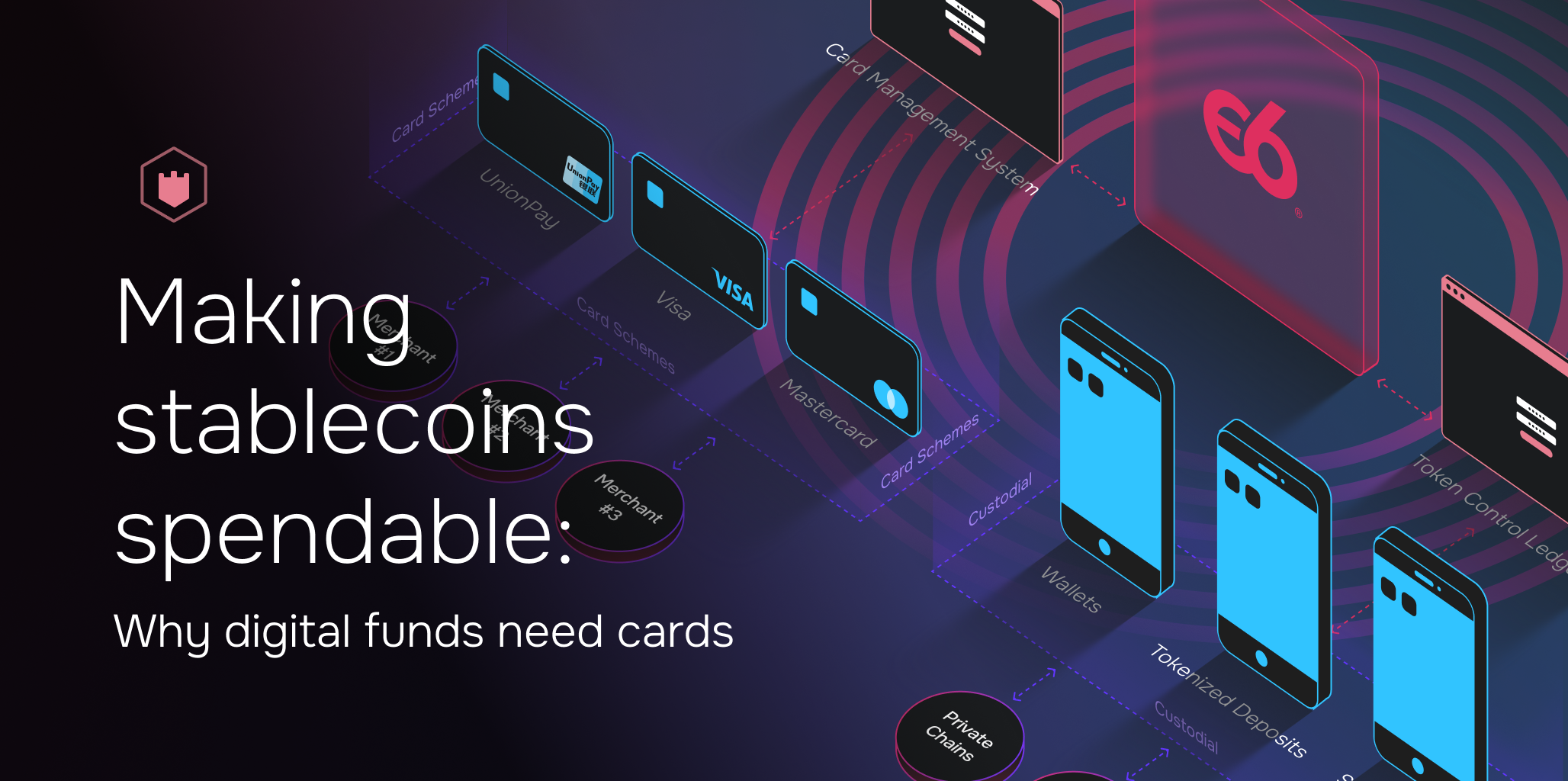
Stablecoins are flipping the script on how money moves. They can support near-real-time transfers, cross-border payments and digital financial products that operate beyond traditional banking hours. But for stablecoins to become part of everyday financial life, people need a simple way to spend them.
The solution is a familiar player in the payments landscape: debit cards.
By connecting stablecoin balances to debit card experiences, banks and fintechs can bridge digital assets and traditional commerce, making user adoption even easier. Customers can access the digital value they hold to pay at merchants that already accept established card networks.
For financial institutions, this creates an opportunity to turn stablecoins from assets people primarily hold or transfer into money they can use in everyday life. Realizing that opportunity, however, requires more than issuing a card. It requires infrastructure that connects digital-asset balances, real-time authorization, currency conversion and card payment processing.
Stablecoins are growing. Spending them should be easy.
Stablecoins offer a digital representation of value, commonly designed to maintain a stable value relative to a reference currency such as the US dollar. They can move between compatible wallets and blockchain networks without relying on every step of a traditional bank transfer.
But spending stablecoins directly remains less straightforward than paying with a conventional debit card. A merchant generally expects a payment through its existing acquiring and card network infrastructure. Without the right infrastructure connecting the stablecoins and card, stablecoin holders may need to transfer their assets to an exchange, convert them to fiat currency and move the proceeds before they can spend.
A stablecoin-linked card minimizes the steps in that process. Instead of asking customers to change how they pay, the card connects their available digital-asset balance to an existing payment method. The customer can use a physical or virtual card for eligible purchases, while the issuing infrastructure handles authorization and the necessary funding or conversion processes. The result is a familiar checkout experience backed by a different kind of financial infrastructure.
Why stablecoin-linked cards matter
- Make digital assets spendable in everyday commerce
- Support cross-border customers
- Create new financial products
Holding a stablecoin and being able to spend its value are two different things. Cards help close that gap by connecting digital-asset balances to established merchant acceptance networks.
For consumers, this can mean easier access to the value they hold in a wallet. For businesses, it can create a more practical way to use stablecoin balances for eligible expenses and purchases.
The merchant doesn't necessarily need to adopt a new blockchain-based payment method. The card program handles the connection to the existing payments ecosystem.
Stablecoins are particularly relevant to globally distributed customers, international businesses and fintechs serving multiple markets.
Whether for a customer holding digital funds while traveling abroad, an international business wanting more flexibility managing digital and fiat balances, or a fintech looking to serve customers who spend around the world, a stablecoin-linked card is a solution in supported markets.
While a card won’t eliminate foreign-exchange costs, local regulations or card network requirements, it does provide an accessible mode of connecting digital value with the payment experiences customers already understand.
Cards are more than a spending mechanism. They can become the front end for a broader range of financial products.
A fintech could offer a stablecoin-funded debit card alongside a multi-currency wallet. A digital-asset platform could let customers spend supported balances without requiring them to manually initiate a conversion for every purchase. A financial institution could combine digital assets with fiat accounts, payment cards and rewards.
These propositions can help businesses differentiate their offerings, deepen customer engagement and create new opportunities for revenue.
The important point is that the card is the visible customer experience. The underlying ledger and processing platform determine how much flexibility the business has to build and evolve the product.
The infrastructure challenge: Connecting digital assets to card payments
Building a stablecoin-linked card program involves coordinating several components.
The program needs a way to maintain accurate customer balances, determine whether a transaction should be approved, apply the appropriate controls, and handle funding and conversion. It also needs to support the card transaction lifecycle, including authorizations, reversals, clearing and settlement.
The timing matters. Card authorizations typically need a response in seconds, so the system must be able to check available funds and apply transaction rules within the authorization flow.
If a stablecoin balance is the funding source, the platform must also coordinate the relationship between that balance and the fiat-denominated payment. Depending on the architecture, this may involve real-time conversion through a liquidity provider, just-in-time funding or other program-specific arrangements.
A fragmented stack can make these requirements harder to manage. Separate systems for wallets, ledgers, conversion and card processing can introduce integration complexity and make product changes more difficult.
That's why the infrastructure behind a stablecoin card is just as important as the card itself.
How Episode Six connects stablecoins to card spending
Episode Six provides cloud-native issuer processing and ledger infrastructure designed to connect digital assets with traditional payments.
Our platform combines a configurable, asset-agnostic ledger with card issuing and real-time transaction processing. The ledger can support fiat currencies, stablecoins, cryptocurrencies and rewards, providing a foundation for financial products that bring different asset types together.
For stablecoin-linked card programs, several capabilities are especially relevant.
A ledger that supports both digital and fiat balances
A multi-asset ledger can maintain the account and balance structures required for products that combine digital assets with traditional currency.
This gives businesses flexibility to design products around their customers' needs, rather than treating every asset type as an entirely separate product infrastructure.
Real-time authorization and configurable controls
When a cardholder makes a purchase, the issuing platform needs to determine whether the transaction meets the program's approval rules and whether sufficient funds are available.
Episode Six supports real-time authorization with configurable transaction logic and controls. These capabilities can help program designers determine how card transactions interact with available balances, funding sources and product rules.
A connection to established card networks
Stablecoin holders shouldn't have to wait for universal merchant adoption of blockchain payments to make their balances useful.
Episode Six provides card issuing and processing capabilities with connectivity to established payment networks, including Visa and Mastercard, subject to the relevant program, market and network arrangements.
This lets businesses build digital-asset-linked card experiences around existing card acceptance infrastructure.
Flexibility to integrate with other providers
Stablecoin programs may depend on external wallets, custodians, liquidity providers, exchanges and compliance services.
Episode Six's API-based architecture supports integration with third-party providers, giving businesses flexibility to design a solution around their existing technology and partner ecosystem.
Rather than requiring every component to come from one vendor, the platform can provide the ledger and issuing layer that connects the broader solution.
From stablecoin spending to bank-issued tokenized money
The opportunity extends beyond fintechs and digital-asset platforms.
Banks are increasingly exploring tokenized deposits and their own stablecoins as ways to extend financial services into digital-asset networks. But issuing tokenized money introduces additional responsibilities: tracking ownership, managing issuance and redemption, and reconciling outstanding tokens against recorded backing.
Episode Six's E6 Token Control Ledger addresses this bank-side requirement by providing a system of record for bank-issued tokenized deposits and stablecoins. It manages the token lifecycle and connects to Episode Six's card issuing and processing capabilities so that supported tokenized funds can be spent through card programs.
This distinction matters. A stablecoin-linked card funded by a third-party stablecoin and a card linked to a bank's own tokenized deposit may have different operating models and control requirements. The appropriate architecture depends on who issues the asset, where the balance is recorded and how conversion, authorization and redemption are handled.
By bringing ledger and issuing capabilities together, Episode Six gives financial institutions a foundation for connecting tokenized money with familiar payment experiences.
The future of stablecoins is about utility
Stablecoins don't become more useful simply because they exist on a blockchain. Their value to customers and businesses depends on how easily they can be integrated into the financial activities people already perform.
Cards provide a practical bridge. They connect digital-asset balances to established merchant acceptance, creating familiar ways to pay while enabling new funding models and financial products behind the scenes.
For banks, fintechs and digital-asset businesses, the opportunity is to build more than a card that happens to be funded by stablecoins. It's to create a flexible financial product that brings together digital assets, fiat currency, real-time processing and customer-facing payments.
Episode Six provides the ledger, issuer processing and integration capabilities to help businesses build that bridge.
What’s next for stablecoins doesn’t stop at moving money on-chain. It's making that money useful wherever customers need to spend it.
Explore Episode Six's crypto payments infrastructure and E6 Token Control Ledger to learn more.
About Episode Six
Episode Six is The World’s Local Processor ®. As a global provider of enterprise-grade card issuing and ledger infrastructure for financial technology companies, banks, and brands, Episode Six delivers the innovative capabilities needed to compete with disruptors and lead the market. Flexibility, adaptability, and resilience are built into the core of Episode Six's platform, ensuring clients maintain a market-leading position. Episode Six operates in over 50 countries, powering millions of accounts and billions in payments globally, with an expanding team located in the US, Canada, UK, Europe, Japan, Singapore, Hong Kong, Australia, and India. Investors include HSBC, Mastercard, SBI Investment Co Ltd, Anthos Capital, Avenir, and Japan Airlines.

E6 Team
About the Author
Episode Six provides financial institutions with solutions for legacy payment stacks that aren’t fulfilling the needs of an expanding industry. We are a global provider of enterprise-grade payment technology and ledger management infrastructure for banks that need to keep pace with disruptors and evolving consumer preferences.